
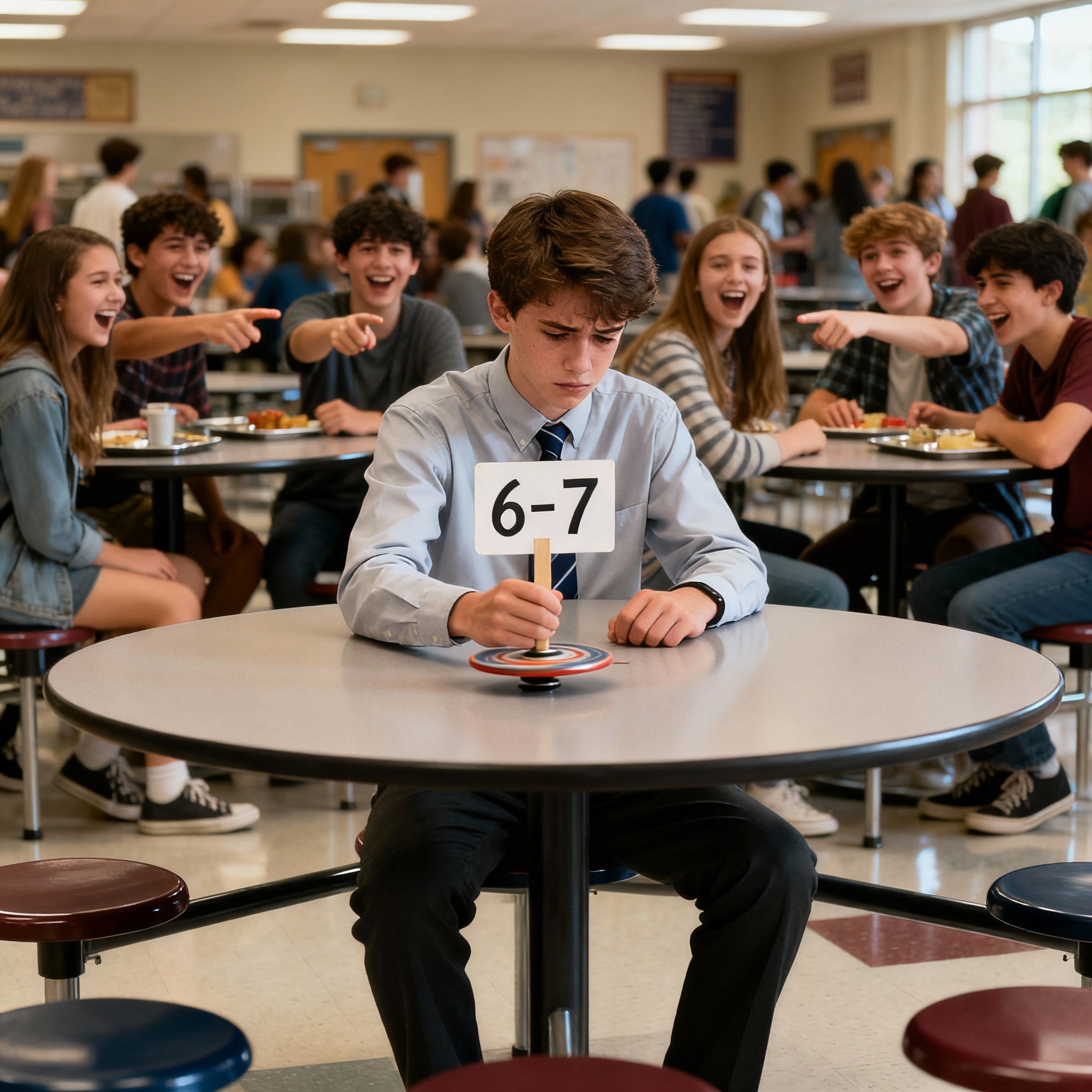
I had a dream about a popular slang phrase “6-7” that’s being used among kids, especially ages 6-7, as a way to bully others. In my dream, I was getting ready for high school and found myself in my closet, about to dress like an older person — wearing dress pants, a dress shirt, and a tie, like a dad going to work. At first, I hesitated, thinking, “I can’t wear these clothes; I’ll be called a ‘6-7’.” But I put them on anyway because I had no other choice. My dad saw me and complimented me, saying, “You look great.” Still, inside, I felt frustrated because those weren’t the clothes I really wanted to wear. On my way to school, other kids started calling me “6-7” because of how I looked. At lunch, the tables were round — which was strange because lunch tables are usually long. I tried to join other groups, but they all said no. Finally, I found an empty table, sat down, and spun a placard on it that said “6-7.” Suddenly, the entire cafeteria shouted “6-7” in unison, using it to exclude and bully me, as if being labeled “6-7” made me less than them. This dream showed me how harmful this slang can be, serving as a tool for exclusion and harassment.
Your dream is rich with symbolism and reflects deep-seated themes of identity, peer perception, and the struggle for acceptance during a formative stage of life. Let’s break down key elements of the dream and explore their meanings.
The act of choosing clothes in your dream is a powerful symbol of how you perceive yourself and how you wish to present yourself to the world. The dress pants, shirt, and tie signify an attempt to conform to a certain societal expectation or adult persona — perhaps embodying responsibility, maturity, or authority. However, your hesitation and internal conflict about wearing these clothes suggest a fear of losing your true self or being misunderstood. Your concern about being labeled a "6-7" reflects anxiety around how you might be perceived by peers, particularly if you don clothes that don't align with your current self-image or interests.
Your nervousness about being called “6-7” connects deeply to the fear of being ostracized. The term encapsulates the anxiety of not fitting in or being ridiculed for your choices — a fundamental aspect of adolescence where peer validation becomes paramount. This reflects a universal struggle many face, especially during the transitional phase from childhood to adulthood. The dream highlights the painful reality of bullying and exclusion, serving as a stark reminder of how language, even playful slang, can turn into weapons of humiliation.
The setting of the cafeteria, particularly with round tables signifying a less conventional arrangement, points toward the social structure of high school life. Cafeterias are places of both nourishment and social interaction, but in your dream, it morphs into a scene of alienation. Your attempts to join various groups only to be denied illustrate feelings of isolation and the challenges of finding a sense of belonging. The round tables may symbolize equality in theory, yet the reality you experience is anything but equal as you're met with exclusion.
Seeing a placard that says “6-7” suggests an acknowledgment of your fears and perhaps a confrontation with your own insecurities. By spinning the placard, you may be attempting to take control of the situation in a way that reveals your vulnerability. It's as if you are acknowledging the label, letting it spin freely so that it doesn't define you — but feeling the weight of collective judgment nonetheless.
Overall, your dream serves as a powerful exploration of identity, peer dynamics, and the pressure to conform. It brings to the surface concerns surrounding reputation, bullying, and the autonomy in self-expression. The dream challenges the harmful aspects of societal labels while inviting you to embrace your authentic self, regardless of others’ perceptions.
It may be helpful to reflect on how these themes play out in your waking life and consider ways to reinforce a sense of self that is resilient to external judgments. Remember, the essence of who you are isn’t defined by trends or the opinions of others; it's about celebrating your uniqueness in the face of societal pressures.